
/ Guides
Floral Mechanics
A guide to the mechanics behind every great floral arrangement
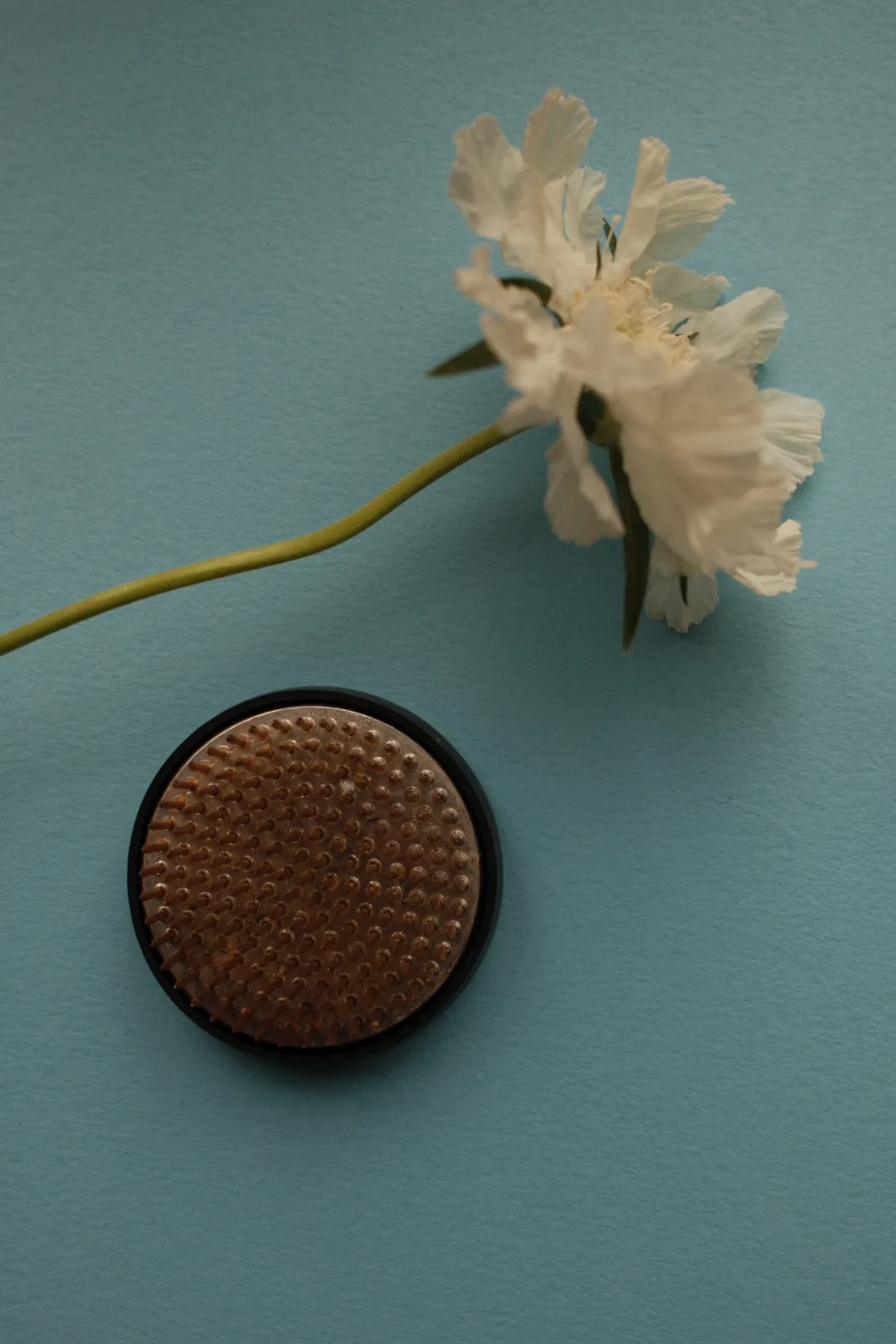
Behind every beautiful arrangement is a structure you can't see. The tools and techniques used to hold stems in place, are the unsung foundation of floristry.
Whether you're a seasoned professional or just starting out, understanding your options can mean the difference between an arrangement that lasts and one that collapses.
Our tip is to match the mechanic to the design, the vessel and the occasion. Knowing when to reach for the kenzan versus the chicken wire is a skill in itself, and one that grows with every arrangement you build.
These are some of our favourite tools to use.
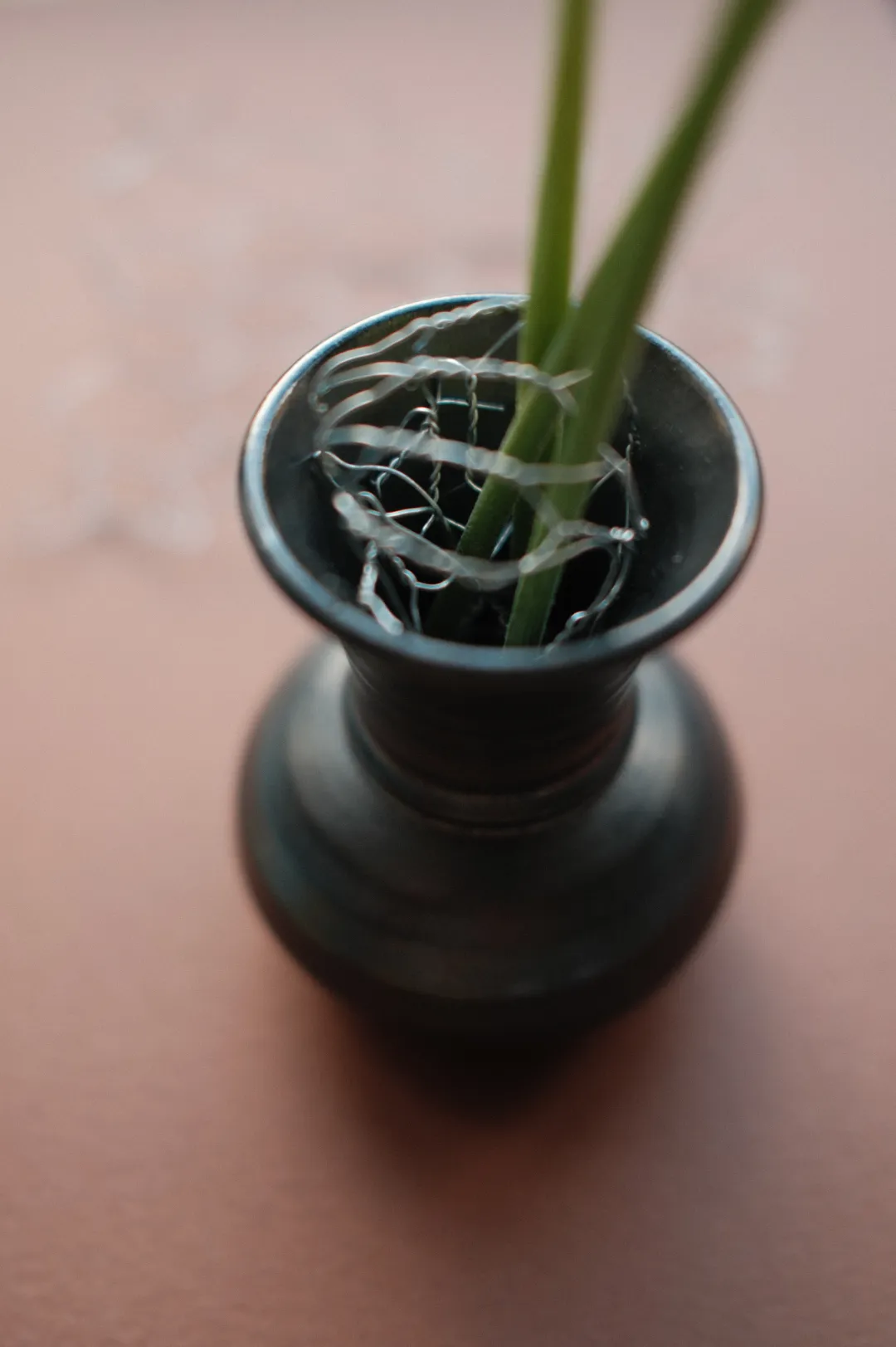
Chicken Wire
One of the most versatile and durable mechanics in floristry, chicken wire can be scrunched, layered, and shaped to fit almost any vessel. Its open grid structure allows stems to be placed at varied angles while still holding them securely. It works particularly well in large, loose, garden-style arrangements where stems need the freedom to move naturally. It's reusable, inexpensive, and kind to delicate stems.
Tip: Flowers can be tricky to remove once placed in chicken wire, especially if they’re full, abundant arrangements. If you’ve not used chicken wire before, we’d suggest playing around with this technique before diving into something important.
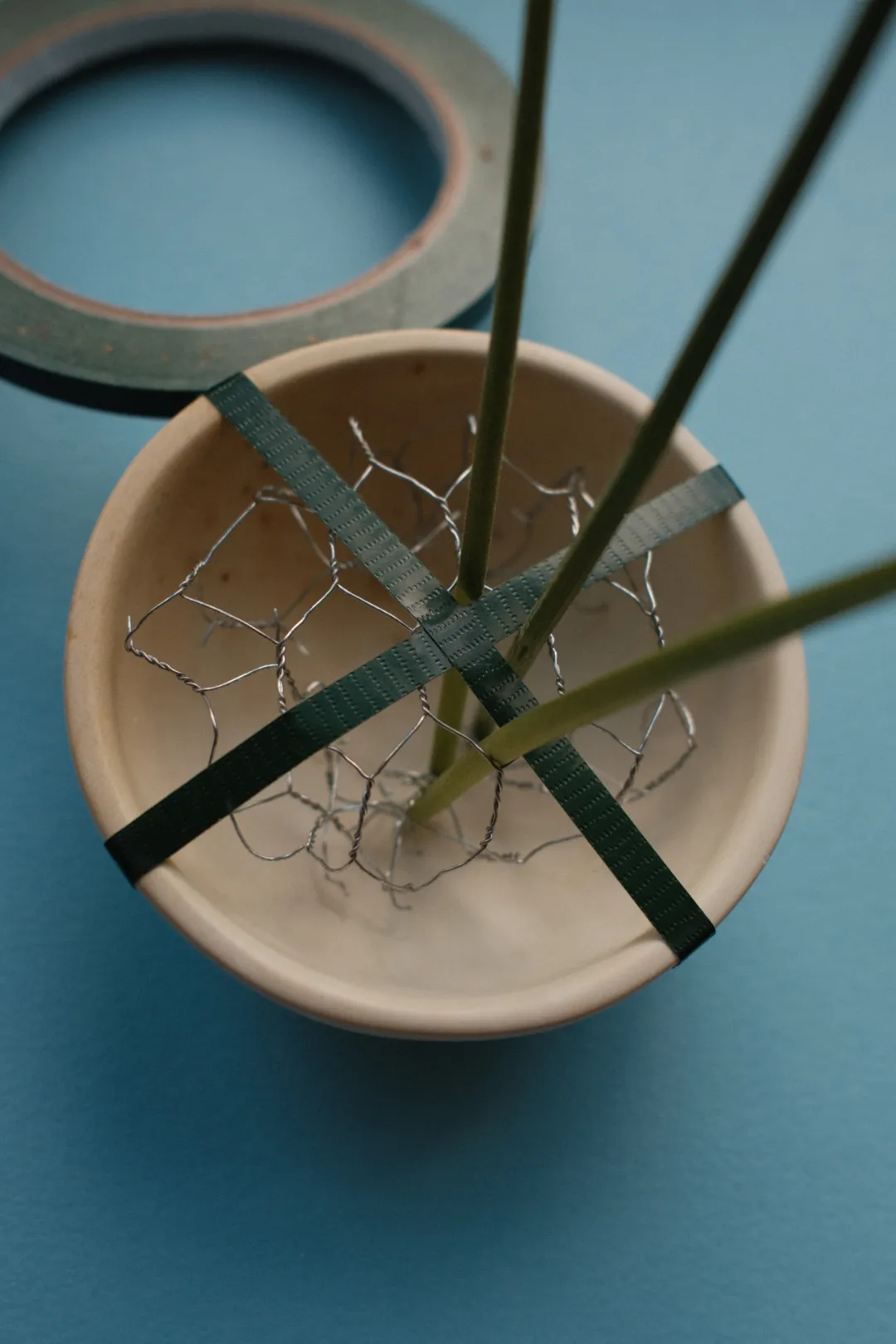
Florist Tape
Florist tape, (also known as pot tape) is best used for securing mechanics within a vessel. It's self-adhesive, so no additional tools are needed. A tape grid over a vase opening is a clean, barely-visible alternative to chicken wire, and works beautifully for structured, contemporary designs. Equally, if your chicken wire needs support, it’s a great way to anchor it into the vase and ensure it’s not coming out.
Tip: If you’re new to floristry, tape is a great way to experiment with spacing. Make a grid across your vessel and start using the 4 sections to arrange around.
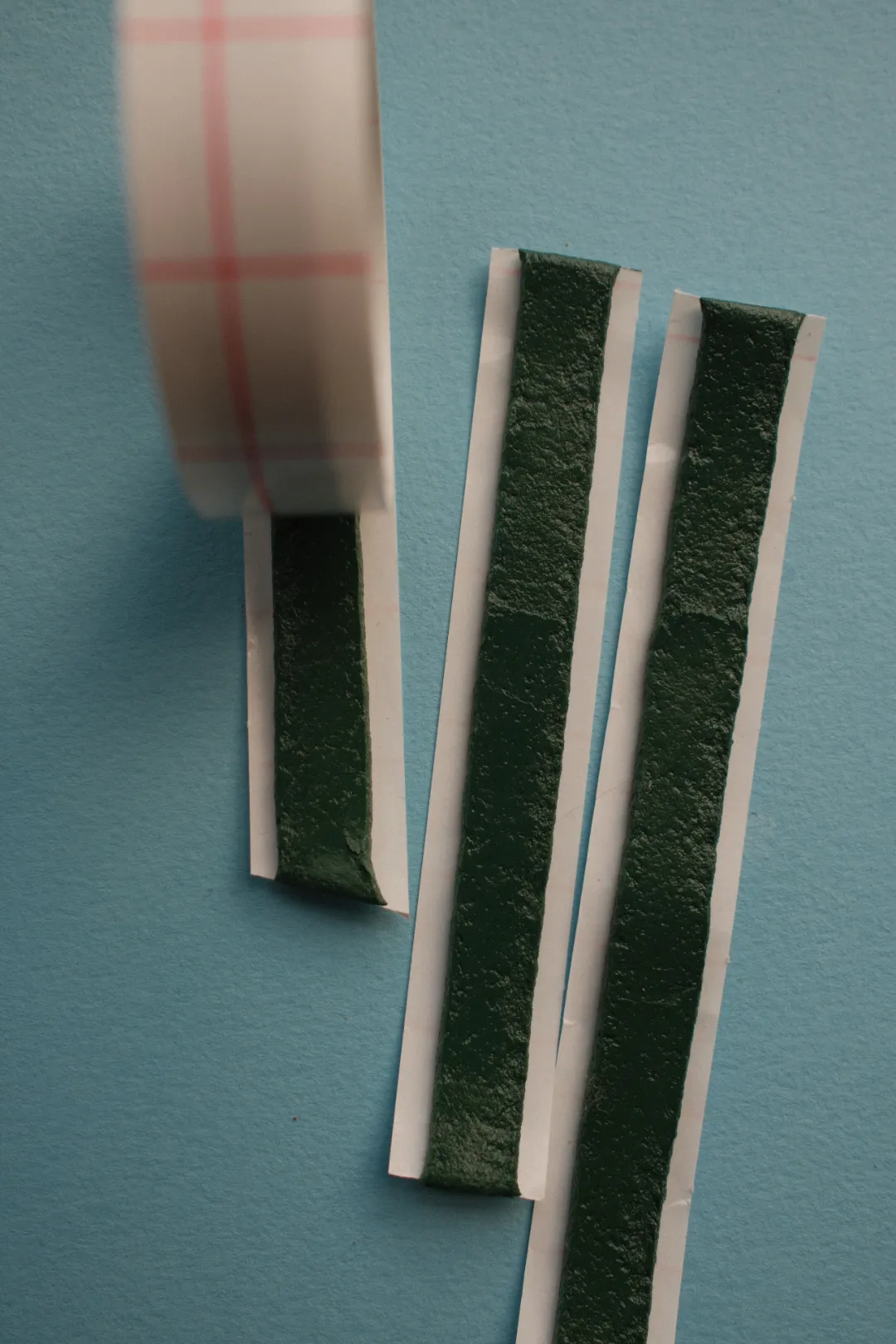
Tack
Tack (also known as oasis fix) is a waterproof, putty-like adhesive used to anchor mechanics firmly in place. It's most commonly used to secure a kenzan to the base of a vessel, preventing movement as stems are inserted. A small strip applied to a dry surface holds really well, making it an essential product in any florist's toolkit. It’s also re-useable if treated carefully.
Tip: Tack is already very sticky, but by warming up and rolling it in the palm of your hands, it can become even more secure and stick to any surface even better. Holding any kenzan full of stems in place.
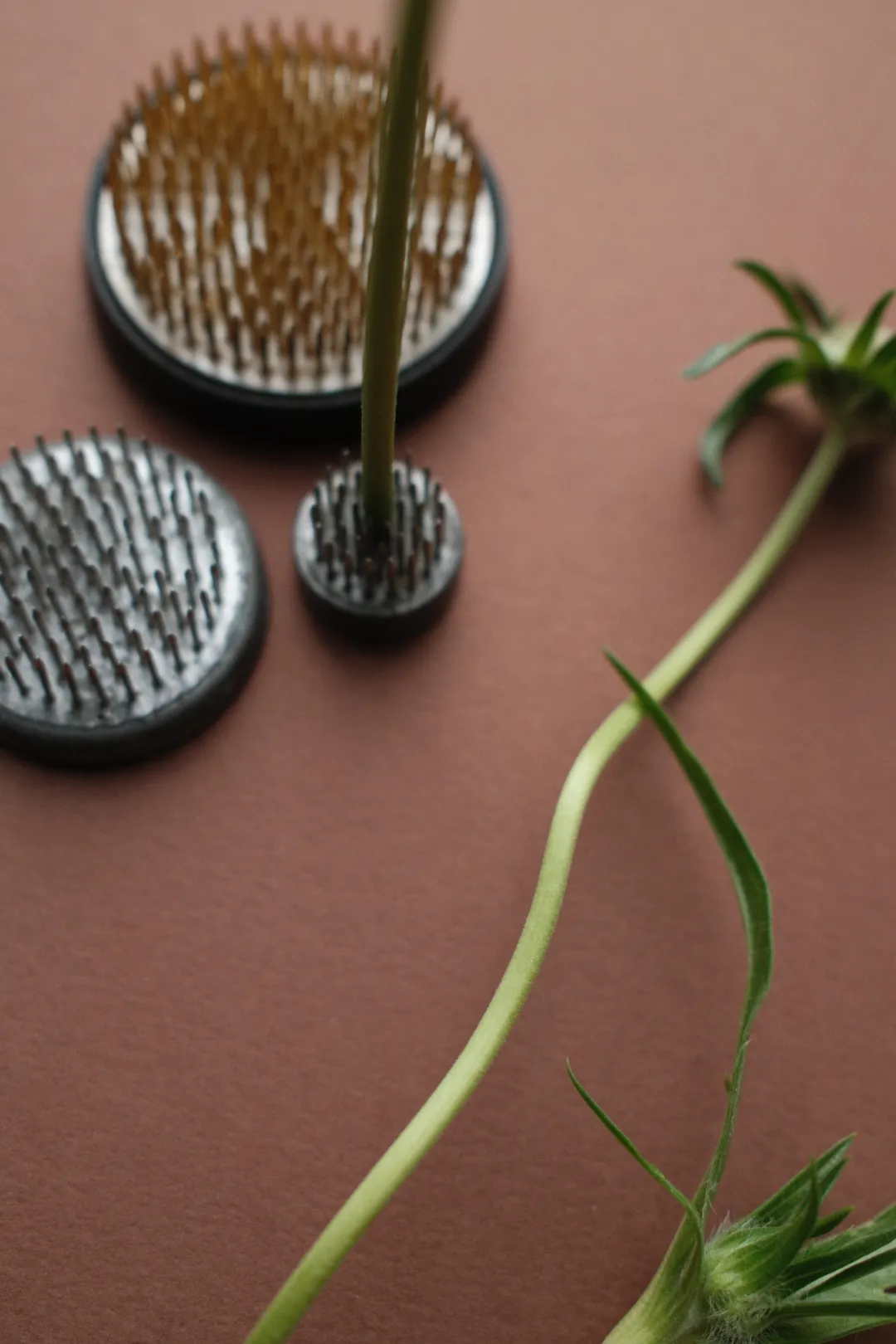
Kenzan
The kenzan (also known a pin frog or flower frog) originates from the Japanese art of ikebana and remains one of the most precise mechanics available.
A heavy metal base fitted with sharp upward-facing pins, it holds stems at exact angles with minimal movement. Kenzans are therefore perfect for ikebana inspired, sculptural arrangements where every stem placement is intentional. They work particularly well with woody stems, which grip the pins firmly and stay put.
As the more elegant form of mechanics, it’s not something that necessarily needs to be hidden. With different sizes and shapes available, they can become part of the design.
Tip: To extend the life of your kenzan you can buy corrector tools. One allowing you to straighten bent pins and another to help remove old debris. Essentials for any kenzan lover.
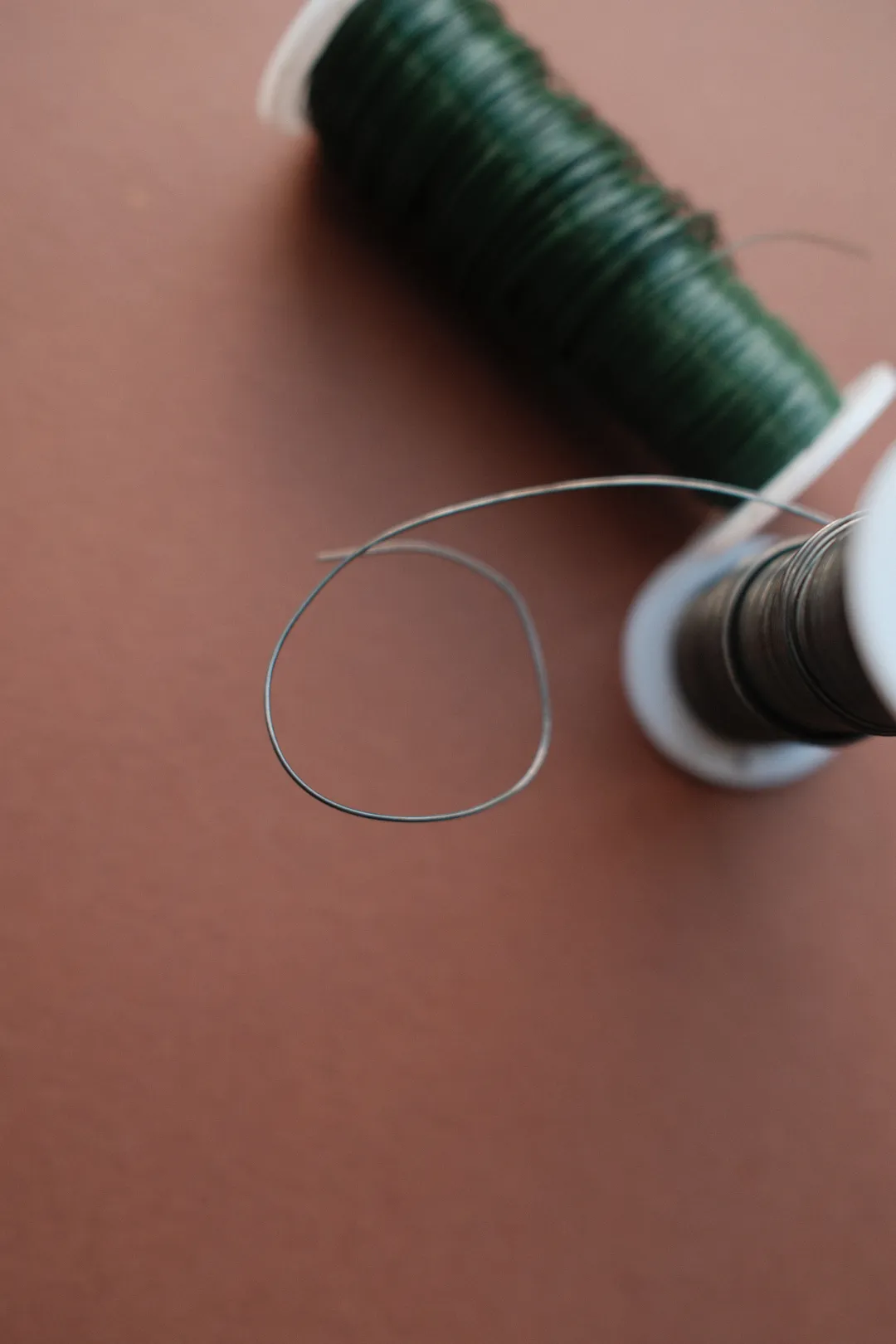
Florist Wire
Floristry wire is a fine, pliable metal wire used to support and manipulate individual stems, flowers, and foliage. Threaded carefully through a stem or passed up through a flower head, it allows the florist to bend and position blooms that might otherwise droop or move out of place. It's particularly useful for flowers with weak or hollow stems. Wire comes in a range of gauges; heavier gauges provide more support, while finer gauges are suited to delicate petals and lightweight stems.
Tip: Wire comes in all varieties and doesn’t need to be a floristry wire to be successful. As long as it’s thin enough to thread through the stem.
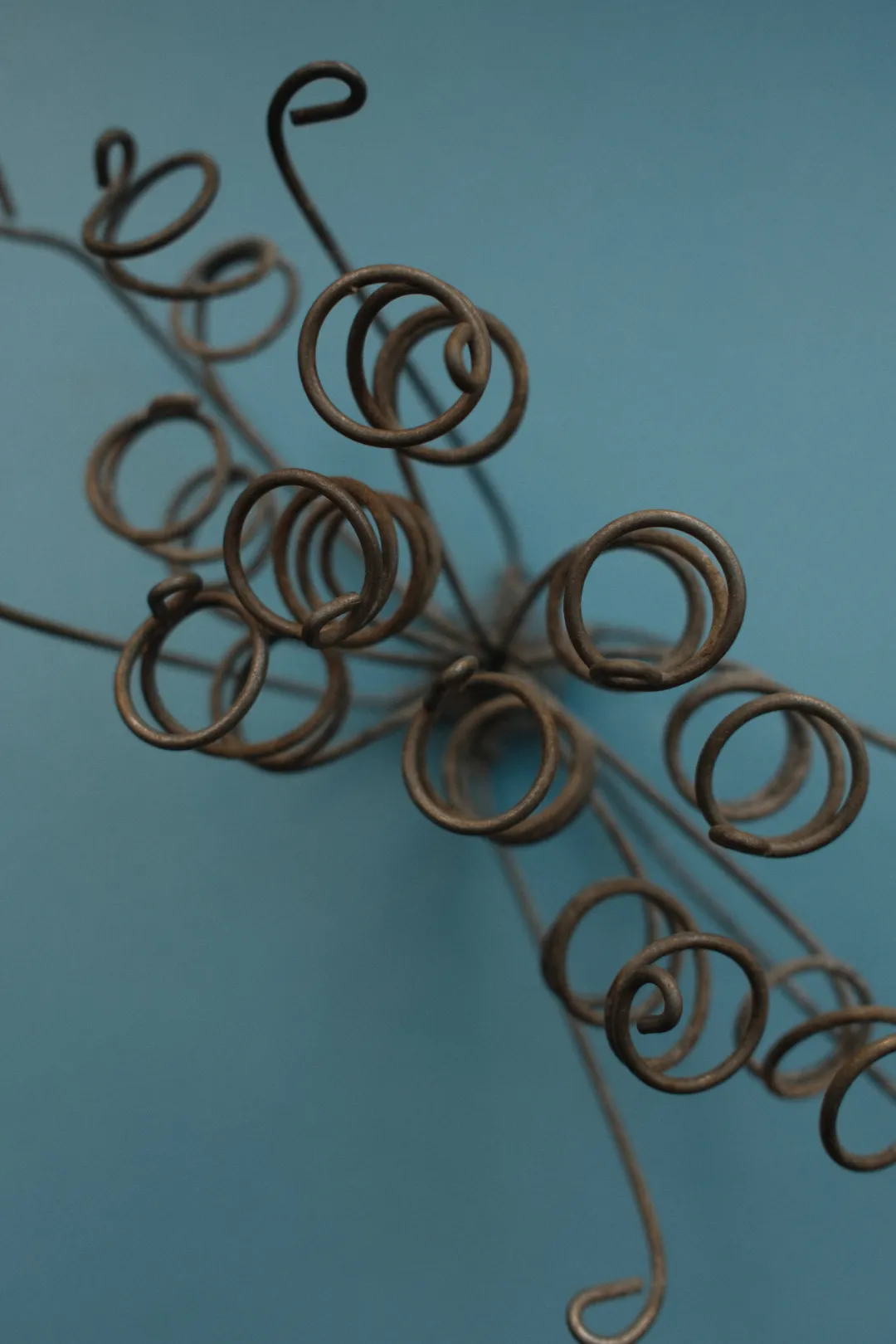
Vintage Frogs
Vintage or decorative wires, often seen coiled, twisted, or woven into vessels - bridge the gap between mechanics and design feature. Unlike hidden structures, a vintage frog can be part of the aesthetic: a rust-toned wire armature adds texture and visual interest while providing structure.
It's popular in contemporary, artisan, and sustainable floristry where exposed materials are celebrated rather than concealed. One of our favourite items to source, as frogs come in all shapes and sizes.
Tip: Make sure to disinfect your vintage frog when you receive it or bring it home. Keeping it clean with help keep your future arrangements from collecting old bacteria.

A note on floral foam
For decades, floral foam was the default mechanic in floristry. It’s ability to hold water and accept stems at any angle made it convenient, but its environmental cost is significant.
Floral foam is made from non-biodegradable plastic, meaning every block ever used still exists in some form today. When it breaks down, it releases microplastics, contributing to long-term damage. It cannot be recycled, composted, or safely disposed of, and the fine particles it sheds during use can also pose a health risk when inhaled.
Every mechanic we have covered offers a far more sustainable alternative. Chicken wire is durable and reusable for years. Florist wire and tape are low-waste by nature. Vintage frogs and Kenzans adds beauty without the environmental impact. Making the switch requires a small adjustment in technique, but the results, both for your arrangements and for the planet - are well worth it.


© SEASONAL FLORAL CURATION LTD. ALL RIGHTS RESERVED
